Here is my first presentation in a series that will cover the content explored in Freemium Mobile Games: Design and Monetization, by Dimitar Draganov. This presentation will cover the current status quo of the mobile game industry.
Monday, December 5, 2016

Monday, November 14, 2016
Student Game Expo (September 2016)
In September of 2016, I was fortunate enough to be given the opportunity to help facilitate a Student Game Expo for current game development, undergraduate students. While I got to run and facilitate the SGX, I did have valuable assistance from fellow classmates Cardell King, Brian Vazquez, Justin Hentges, Jessica Lin, and Wade Martin. Additionally, there were a couple core faculty members that really did everything in their power to help us throw a great event. Nick Carver, in particular, was very passionate and motivational in helping us provide a unique, fun experience.
In addition to showcasing undergraduate game projects, the event included trivia (with awesome prizes), extreme video game music, food and drinks, photo opportunities with a polaroid camera, and lots of other fun activities. I was also able to secure a venue close to campus to host the event, Campus Cards and Games II. They were instrumental in coordinating with me to make sure we had the location and necessary furniture (tables and chairs) and really helped to build a solid relationship that helps both parties. Here is a flyer we used to help advertise the event online and around Orlando, FL.

This was a great opportunity to practice running an event with many different attributes and aspects to cover. I was responsible for coordinating everything (with the help of my team) to ensure that the undergraduate students presenting had everything they could possibly need. These leadership and management skills will make a great addition to my skill set and I hope to utilize them again soon in the future.
Special thanks to Katherine Rybak for her volunteer work on this expo.
In addition to showcasing undergraduate game projects, the event included trivia (with awesome prizes), extreme video game music, food and drinks, photo opportunities with a polaroid camera, and lots of other fun activities. I was also able to secure a venue close to campus to host the event, Campus Cards and Games II. They were instrumental in coordinating with me to make sure we had the location and necessary furniture (tables and chairs) and really helped to build a solid relationship that helps both parties. Here is a flyer we used to help advertise the event online and around Orlando, FL.

The event had an amazing turnout with well over a hundred people coming in to experience the event. We got some great footage of the event to use as future promotional material (thanks to Marvin Welch for capturing and editing this video).
This was a great opportunity to practice running an event with many different attributes and aspects to cover. I was responsible for coordinating everything (with the help of my team) to ensure that the undergraduate students presenting had everything they could possibly need. These leadership and management skills will make a great addition to my skill set and I hope to utilize them again soon in the future.
Special thanks to Katherine Rybak for her volunteer work on this expo.
Wednesday, November 2, 2016
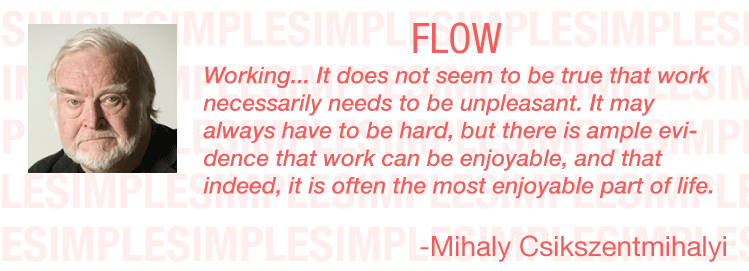
Mastery Journal Research Topic: Impact of Flow State on Monetization Design
Several months of research, brainstorming, compiling, and editing have helped to present a finalized topic for my mastery thesis project. My thesis dwells in an established convergence of both Design and Monetization fields of video game development ("GDC 2017", 2016). With the rapid evolution seen over the past several years in the way games generate money, pugnacious realities can wreak havoc on a game for simply not utilizing the correct monetization structure (Rose, 2016). While monetization is one of the most vital aspects of game design, it is often the most overlooked in the industry today and not considered by many game designers (Rose, 2016). My thesis will aim to show the importance of monetization as a part of any game’s foundational design.
 |
| (via http://cdn.quotationof.com/images/mihaly-csikszentmihalyis-quotes-7.jpg) |
While there are yet to be any major, established research in this specific area, there are several influential voices that handle these topics individually. Monetization, specifically in the mobile and social marketplaces, has been covered in-depth by Tim Fields of Kabam (Fields & Cotton, 2012). Other industry leaders such as Kate Flack, Ethan Levy, and Martin Koppel have also shared valuable information in regards to the impact of monetization on video games (Rose, 2016). Flow state in games has also been explored extensively by several industry voices. Mihaly Csikszentmihalyi, who first discovered Flow as a construct in the 1980’s and 1990’s, has spoken at length about the components of flow in games (Chen, 2006). Jenova Chen is also a notable voice who has explored flow in video game design, making large leaps forward in integrating the two together (Chen, 2006). I will use these voices and many more as I continue to build upon my thesis in the coming months.
_________________________________________________________________________________
References
Chen, J. (2006). Welcome to Flow in Games. Jenovachen.com. Retrieved 30 October 2016, from http://jenovachen.com/flowingames/introduction.htm
Fields, T. & Cotton, B. (2012). Virtual Goods. Gamasutra.com. Retrieved 31 October 2016, from http://www.gamasutra.com/view/feature/135067/virtual_goods__an_excerpt_from_.php
GDC 2017. (2016). Gdconf.com. Retrieved 28 October 2016, from http://www.gdconf.com/conference/
Rose, M. (2016). Understanding the realities of video game monetization. Gamasutra.com. Retrieved 30 October 2016, from http://www.gamasutra.com/view/news/205412/Understanding_the_realities_of_video_game_monetization.php
Wednesday, October 19, 2016
Flow State in Video Games
Mastery Journal Article Analysis: Flow State
Identification of Topic
For my Mastery Program research assignment, I have chosen to investigate the area of game design. There are many facets to game design that present themselves as possible areas of research, but this paper will investigate flow state. Specifically, it aims to build upon the major influences of flow state: Seung-A Annie Jin, Marin Klasen, Rene Weber, and Mihaly Csikszentmihalyi.
Monday, October 10, 2016
Ozone (Game Design Project)
Last week, in Game Design class, I was tasked with creating a Game Design Powerpoint Pitch, Game Mechanics Document, User Interface mockups, and a Prototype. I was given a couple stipulations in regards to the game design.
First, Justin and I decided to brainstorm ideas for the game, focusing on the two stipulations given for the design. We got really lucky and developed a good narrative early on that lent itself to both of our goals: a turn-based strategy in a sci-fi setting against a parasitic race. We took this idea and evolved it into Ozone, a game where the player assumes the role of planet earth, pitted against the humans who are polluting and destroying Her. Environmentalism is a shared passion that me and Justin found out we shared, and it's a growing problem. Why not make a game, marketed towards teen kids, that can show the dangers of humanity's impact on Earth in an engaging way?
We would also allow players to taking control of the entire Earth. Through both localized attacks and galactic movement, players would get to move as a celestial body.
When determining the genre and world of the game, we featured
After building upon the core mechanics of the game, we came up with a very exciting and interesting game. Here are some really interesting bullets of the design that we came up with:
Here's the initial design pitch we came up with:
- First, the game would have to involve a social issue (similar to Games for Change) in some way.
- Second, the game should involve a unique form of player movement outside of industry norms such as running, walking, jumping, crouching, etc.
First, Justin and I decided to brainstorm ideas for the game, focusing on the two stipulations given for the design. We got really lucky and developed a good narrative early on that lent itself to both of our goals: a turn-based strategy in a sci-fi setting against a parasitic race. We took this idea and evolved it into Ozone, a game where the player assumes the role of planet earth, pitted against the humans who are polluting and destroying Her. Environmentalism is a shared passion that me and Justin found out we shared, and it's a growing problem. Why not make a game, marketed towards teen kids, that can show the dangers of humanity's impact on Earth in an engaging way?
We would also allow players to taking control of the entire Earth. Through both localized attacks and galactic movement, players would get to move as a celestial body.
When determining the genre and world of the game, we featured
After building upon the core mechanics of the game, we came up with a very exciting and interesting game. Here are some really interesting bullets of the design that we came up with:
- Player's health would be displayed in a unique way, as the Ozone layer. Being able to see a physical representation of the health was something we really liked because it allows for an education display versus a simple HUD element.
- All mechanics of the game will be based on an internal historical database of scientific data. Planet movement, strategic attacks, AI response, and correlations between effects will have outcomes based on scientific fact, to help back up the educational factor of the game.
- We decided that on the first play, we would present a tutorial that starts at the Industrial Revolution and ends at the current time. This will allow players the ability to learn the mechanics of the game in a known setting. Being able to prepare for known events will prepare the player for the more complex interactions that take place during the futuristic game play.
Here's the initial design pitch we came up with:
Tuesday, October 4, 2016
Immersion in Video Games
Immersion in Video Games (Topic #4)
Being able to completely immerse a player into a game requires several different factors involved in the game design process. The narrative of the game can influence immersion. It can also be influenced by the physical hardware the player uses. Being able to immerse players seamlessly in a video game has been a constant goalpost in the video game industry.
a. Immersed in virtual worlds and minds: Effects of in-game storytelling on immersion, need satisfaction, and affective theory of mind
i. I learned that storytelling within the game can create a more immersive experience for the player. Need satisfaction, the intrinsic sense of accomplishment when aspirations are fulfilled, also becomes positively affected. This ultimately leads to players being able to take on the roles, beliefs, and convictions of others (theory of mind). This strongly indicates a causation between immersion, needs satisfaction, and theory of mind being accomplished.
ii. As a game designer, understanding the impact of your work is very important. By understanding the causal relationships listed above, a game designer can recognize the potential effect his creation might have on an audience. Additionally, a designer could share unique experiences with others who would be able to truly relate, thanks to an unbridled immersion level.
iii. Understanding immersion can help me with my project this month, coordinating a Game Expo. Understanding what types of environments and factors result in higher levels of immersion and entertainment will allow me to facilitate a conducive environment for the expo. I will further research how I can make the expo environment more appealing and immersive to players coming to attend.
b. Video Games, Immersion, and Cognitive Aggression: Does the Controller Matter?
i. This article gave a good amount of information on the impact the seemingly inconsequential factors can have. In this case, something as simple as the controller a player uses can have a positive impact on the player’s sense of immersion and their cognitive (or planned) aggression. In this scenario, players felt more immersed in a boxing game while using a controller that mimicked a boxing glove. Due to the realism, they were also more prone to “aggressive” behavior. In this case, boxing.
ii. Understanding how the hardware used can affect a player’s experience is vital in the gaming field. This industry is constantly evolving and changing, with new consoles and controllers being developed all the time. As a designer, it is important to take into consideration all of the potential factors that might be affected by external aspects of gameplay, such as a controller.
iii. This article does not directly relate to my project this month.
Topic #4 References
Bormann, D. & Greitemeyer, T. (2015). Immersed in Virtual Worlds and Minds: Effects of In- Game Storytelling on Immersion, Need Satisfaction, and Affective Theory of Mind. Social Psychological And Personality Science, 6(6), 646-652. http://dx.doi.org/10.1177/1948550615578177
McGloin, R., Farrar, K., & Krcmar, M. (2013). Video Games, Immersion, and Cognitive Aggression: Does the Controller Matter?. Media Psychology, 16(1), 65-87. http://dx.doi.org/10.1080/15213269.2012.752428
Monday, October 3, 2016
Video Games and Choice Culture
Video Games and Choice Culture (Topic #3)
As culture is influenced by the “post-modern condition” the need for choice becomes more and more prevalent (Wilkinson & Clark, 2014). Rigid rules and predictability are mundane and often not tolerated by today’s youth. Video games offer a truly unique and exceptional experience compared to its heavily scripted counterparts in the media realm. Video games are reliant on choice, so I wanted to explore the correlation between choice theory and video games.
a. DIGITAL CHOICES AND FULFILLMENT OF CHOICE THEORY'S FOUR BASIC PSYCHOLOGICAL NEEDS
i. In this article I learned about the four basic psychological needs (love, power, freedom, and fun) and how video game players were able to achieve at least one of these needs through the choices presented in gameplay (Alexander, Rainey, & Page, 2016). This shows that, through choice theory, we can allow audience members to potentially meet all four of their basic psychological needs.
ii. I can easily see how this information should be applied to the video game industry. Being able to meet the needs of a player’s psychological needs should be a top priority of any game designer. Understanding that meeting these needs will lead to other benefits such as increased immersion and character identification will have an untold positive influence on the audience’s experience.
iii. During the Game Expo project this month, I will implement by knowledge of choices and psychological need fulfillment to provide the best possible experience for those involved possible.
b PAY NO ATTENTION TO THE MAN BEHIND THE CURTAIN: THE REJECTION OF ARTIFICE AND THE CULTURE OF CHOICE
i. This article did well to instruct me much on American society has shifted towards utilizing less-rigid, more ambiguous systems. More choices are available in nearly every corner of our daily experiences, and stagnation isn’t accepted by younger generations anymore. This allows video games, and other “user-controlled” forms of media, to give players a form of choice control needed by their culture.
ii. Understanding how the culture and its demands has shifted is important to anyone working within the video game industry. Being able to adapt to the needs of the consumer, in this case a multitude of assortments to pick from, will give one an advantage in the field. Additionally, I would strive to further explore the choice culture and how it relates to the decisions available to us throughout the overarching narrative of a game.
iii. Part of my project this month, coordinating the Game Expo, will potentially require me to deal with feedback. I will apply my knowledge of the choice culture to better understand the needs of the players.
Topic #3 References
Alexander, J., Rainey, S., & Page, B. (2016). DIGITAL CHOICES AND FULFILLMENT OF CHOICE THEORY'S FOUR BASIC PSYCHOLOGICAL NEEDS. International Journal Of Choice Theory & Reality Therapy, XXXV(2), 25-35. Retrieved from http://search.ebscohost.com.oclc.fullsail.edu:81/login.aspx? direct=true&db=a9h&AN=115876649&site=ehost-live
Wilkinson, M. & Clark, P. (2014). PAY NO ATTENTION TO THE MAN BEHIND THE CURTAIN: THE REJECTION OF ARTIFICE AND THE CULTURE OF CHOICE. ASBBSEjournal, 10(1), 132-141. Retrieved from http://search.ebscohost.com.oclc.fullsail.edu:81/login.aspx? direct=true&db=bth&AN=102984642&site=ehost-live
Subscribe to:
Posts (Atom)